Generative AI is changing how we write, create images, organize knowledge, and interact with digital systems. But understanding this shift requires more than following new models and product releases. It requires experimentation, critical reflection, and a closer look at the ideas behind the technology.

This blog explores language models, generative art, prompt engineering, associative memory, and emerging AI workflows. It examines how these systems behave in practice, where their limitations become visible, and how they influence creative and intellectual work.

The articles also address the broader questions surrounding artificial intelligence: alignment with human goals, power and responsibility, copyright, regulation, and the increasingly complex relationship between people and machines.

Expect technical explorations, creative experiments, conceptual essays, and practical observations—written for readers who want to understand not only what generative AI can produce, but how it changes the way we think, create, and navigate information.
AI Alignment with Gödel

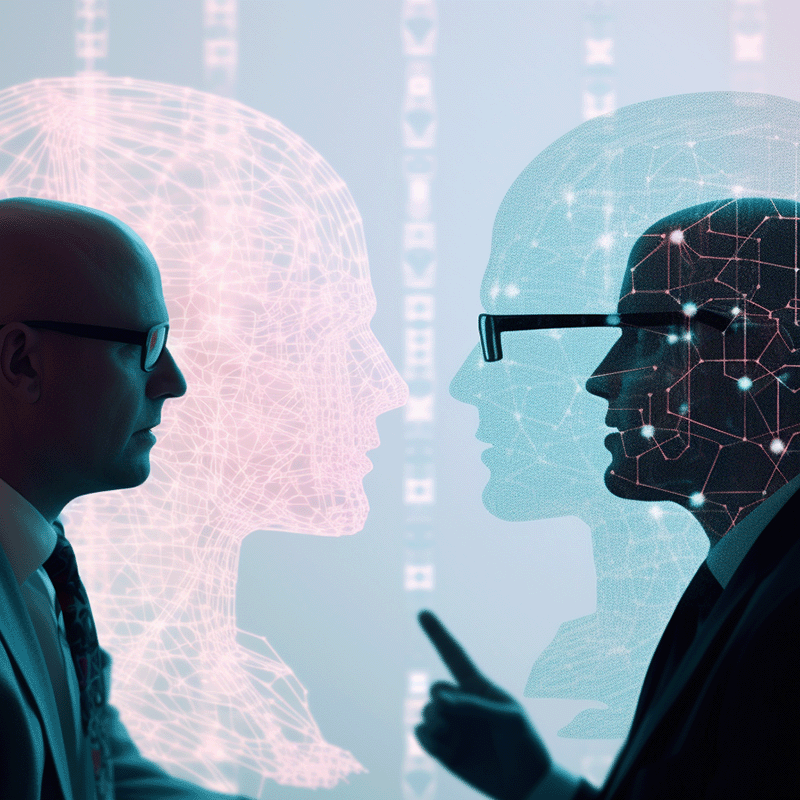
AI Alignment with Gödel

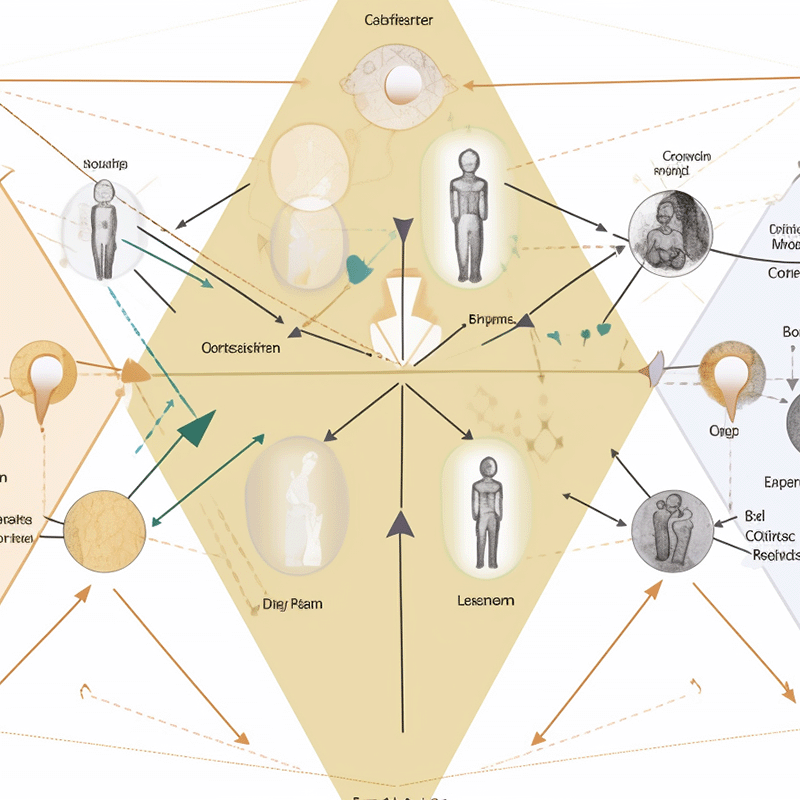
The field of AI has numerous opportunities and challenges with the integration of AI in various aspects of human life. The technicalities and philosophical complexities surrounding the alignment of AI systems with human values and social dynamics are critical. Limitations imposed by Gödel's incompleteness theorems on AI systems highlight the intricacies and uncertainties involved, necessitating continuous research, development, and collaboration for safe and robust AI alignment.

Interview with an AI about philosophy (GPT-4)

Interview with an AI about philosophy (GPT-4)

develop AI systems that can adapt and align with the diverse and complex nature of human values and preferences. The challenge lies in creating AI systems that can generalize well to new situations, avoid unintended consequences, and respect the values and preferences of multiple stakeholders. AI alignment is not about discovering a single truth, but rather about developing AI systems that are beneficial and respectful to humanity, based on our current understanding of human values and preferences.

Evaluating Intelligence: Limits of IQ Tests and AI Model Assessment

Evaluating Intelligence: Limits of IQ Tests and AI Model Assessment

This article explores the limitations of traditional intelligence tests and the Turing test, and highlights the need for new approaches to assessing intelligence in all its forms. Alternative methods for evaluating AI systems, such as tests and benchmarks, are also discussed. As AI technology continues to advance, researchers and developers must adapt and create new methods to ensure systems remain secure and accessible only to human users when necessary, while recognizing that AI can never fully replicate the complexities of human intelligence, emotions, and consciousness.

The Role of Seed Values in Achieving Content Consistency with Midjourney

The Role of Seed Values in Achieving Content Consistency with Midjourney

Using seed values in AI-generated content creation such as Midjourney is crucial for maintaining consistency and reproducibility across projects. This technique controls output randomness and enables users to generate similar results when working with multiple images or designs sharing a common theme or graphic style. However, seed values have limitations due to the probabilistic nature of AI models, and creators may need to rely on other methods such as manual adjustments or fine-tuning the AI model to achieve specific character consistency or style development.

Prompt Engineering with Midjourney v5 and Stable Diffusion

Prompt Engineering with Midjourney v5 and Stable Diffusion

Explore the world of prompt engineering with AI models Midjourney v5 and Stable Diffusion SDXL Beta, generating captivating visual content with diverse camera positions and styles. Use Midjourney templates or ChatGPT to brainstorm prompt ideas, refine them and iterate over results efficiently. Employing images as input for prompt engineering offers a unique approach to creating visual narratives, enhancing the storytelling process with the help of Midjourney's Describe feature or MM-ReAct.

A Comprehensive Comparison of AI Image Generation Architectures

A Comprehensive Comparison of AI Image Generation Architectures

AI-powered image generation has advanced rapidly, with four distinct architectures standing out among the vast array of models: VAEs, GANs, ViTs, and SD. This blog post provides a comprehensive comparison of their primary purposes, methods, and performance metrics to understand the fascinating world of AI-generated imagery. Each architecture has subtypes and variations, and researchers frequently combine elements to create hybrid models, with generative models rapidly evolving as new techniques and improvements emerge.

Embracing the Unpredictable: The Collaborative Dance Between Artists and AI in Generative Art

Embracing the Unpredictable: The Collaborative Dance Between Artists and AI in Generative Art

Generative art with AI is a collaborative process that involves giving the AI direction while accepting its inherent unpredictability. AI models learn from large datasets of images, producing unique outputs by transforming random or user-defined input seeds. Chaos and entropy play different roles in various AI model architectures, impacting the sensitivity to input changes, but also introducing diversity in the generated outputs. Embracing the unpredictability of AI-generated art can lead to the creation of innovative and unexpected works, pushing the boundaries of creativity beyond human limitations.

Creative prompt engineering with MM-ReAct, Midjourney, and ChatGPT

Creative prompt engineering with MM-ReAct, Midjourney, and ChatGPT

Engineering involves creativity and problem-solving, which can be enhanced by using AI technology to reinterpret images. Image interrogation, also known as image-to-text, can be done with more accuracy using MM-ReAct, which identifies and describes objects, scenes, and emotions in an image. Midjourney, MM-ReAct, and ChatGPT can be combined to produce stunning, imaginative, and photorealistic images, and the process can be repeated to create images in new directions.