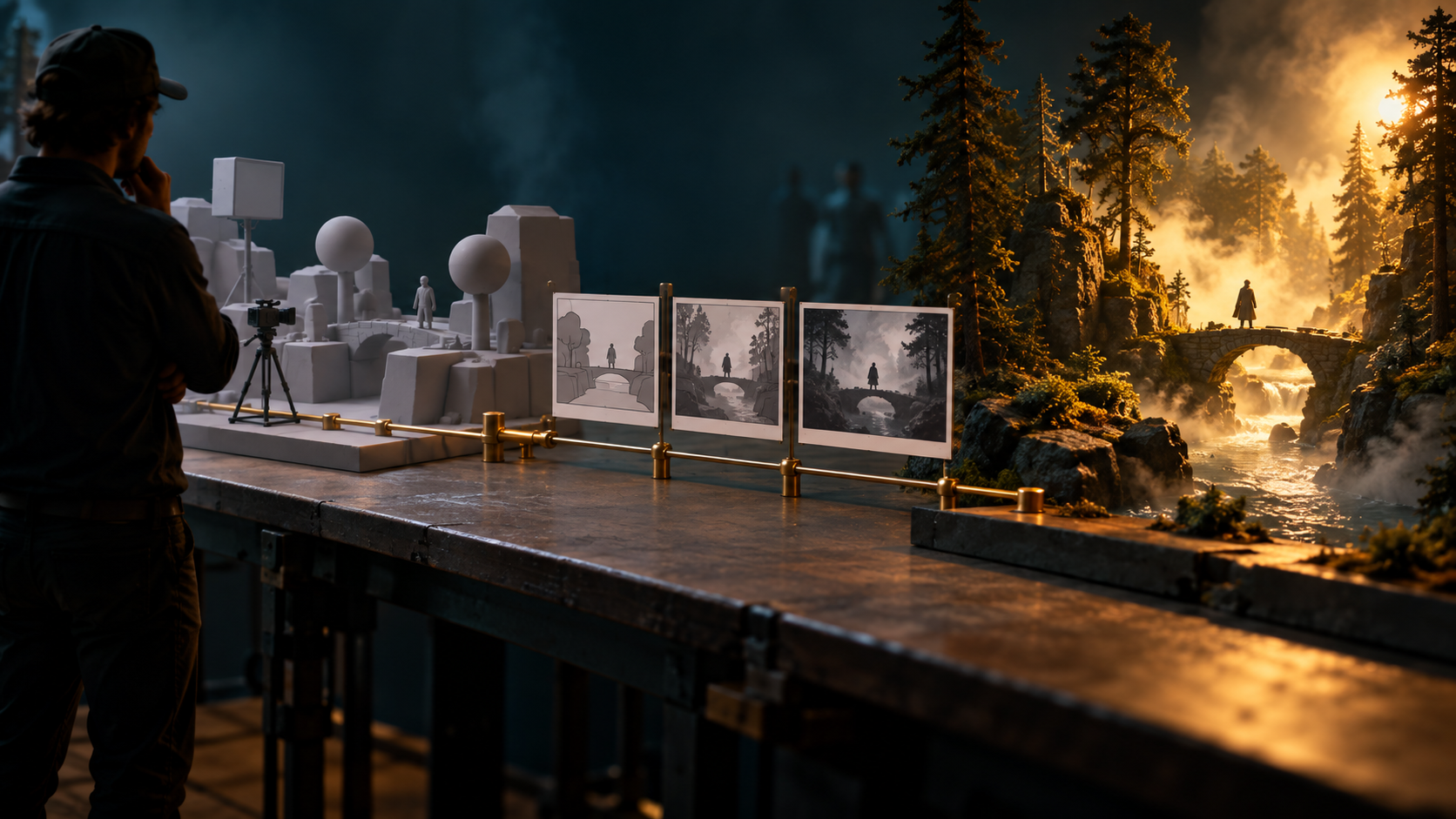
The most useful lesson in an AI film breakdown is often what the filmmakers stopped asking the model to decide.
In the Nexus production threads shared by PJ Ace, the recurring solution is to move decisions into artifacts the team can inspect: grayboxes, storyboards, character sheets and accepted frames. The video model still contributes visual detail, motion and performance. The production team keeps staging and acceptance under its own control.
This is a concrete companion to The Production Black Box: Why Generative Models Should Be Operators, Not Systems . That essay asks how much production should happen inside one opaque generation. These breakdowns show filmmakers working to shrink that span.
What the Evidence Actually Shows
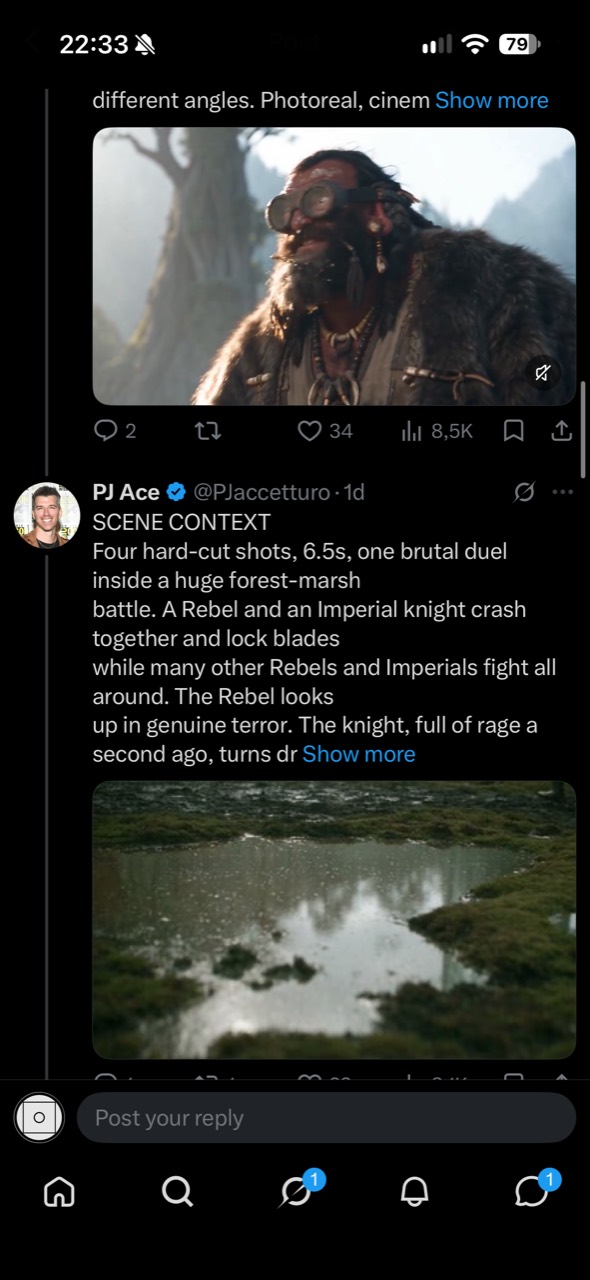
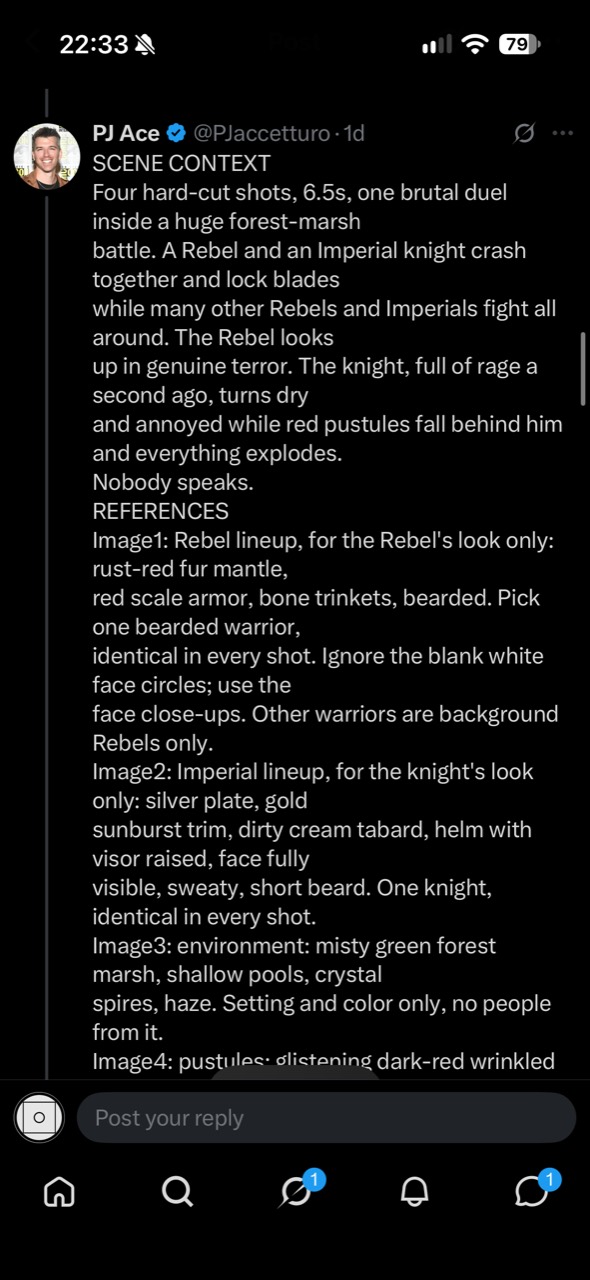
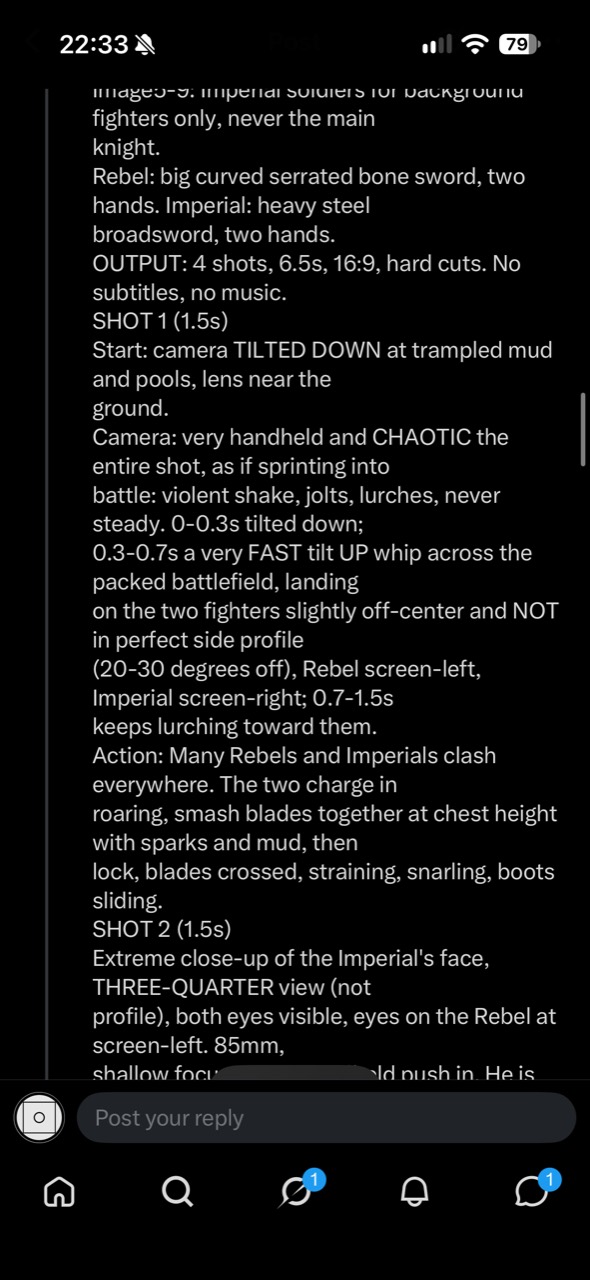
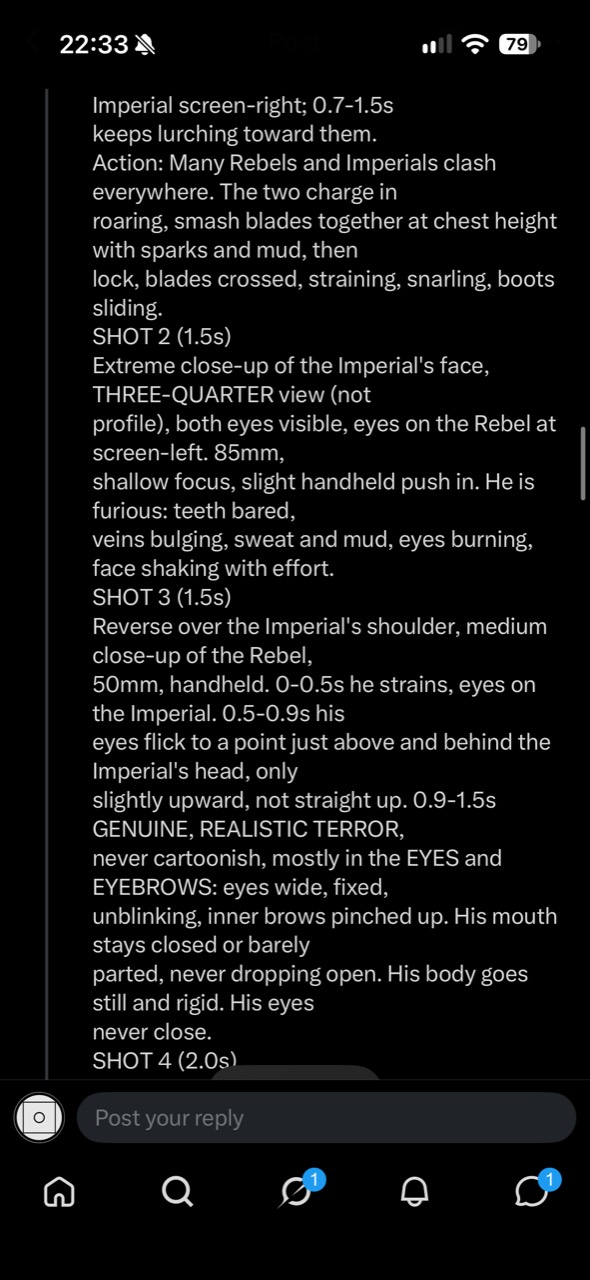
This case study draws on 37 supplied screenshots covering two Nexus threads: the October 21, 2026 episode-six workflow and the October 30 dinosaur-film breakdown. They document the creators’ account of their methods, prompts and results. They are useful production evidence, rather than a controlled comparison of models or an independent audit of costs.
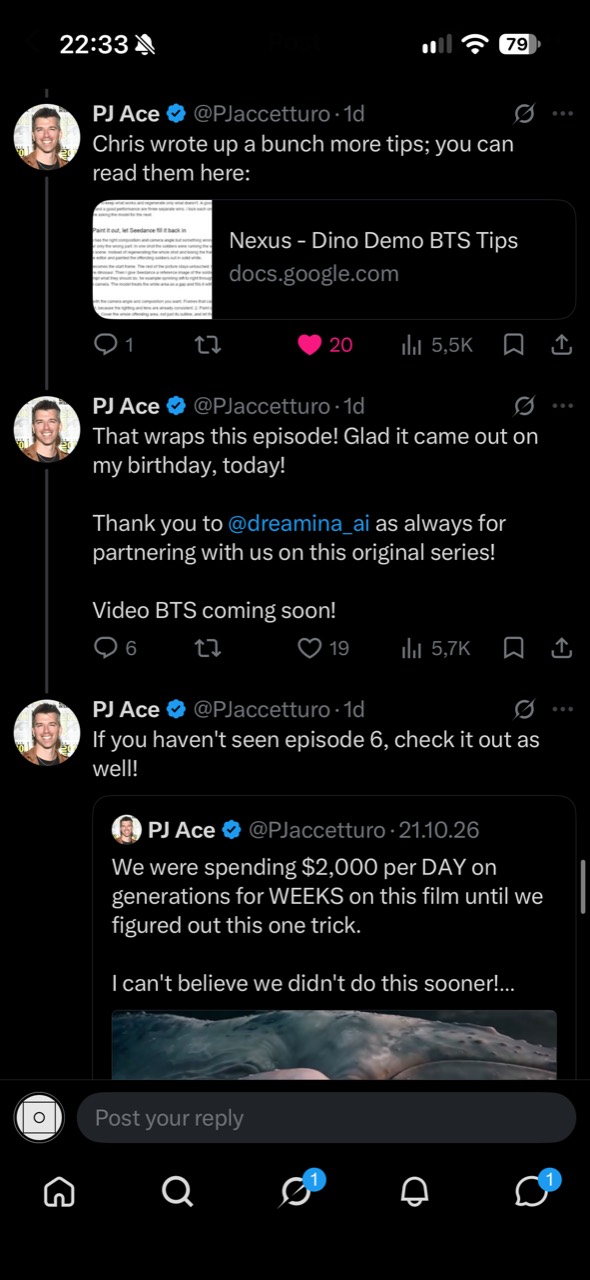
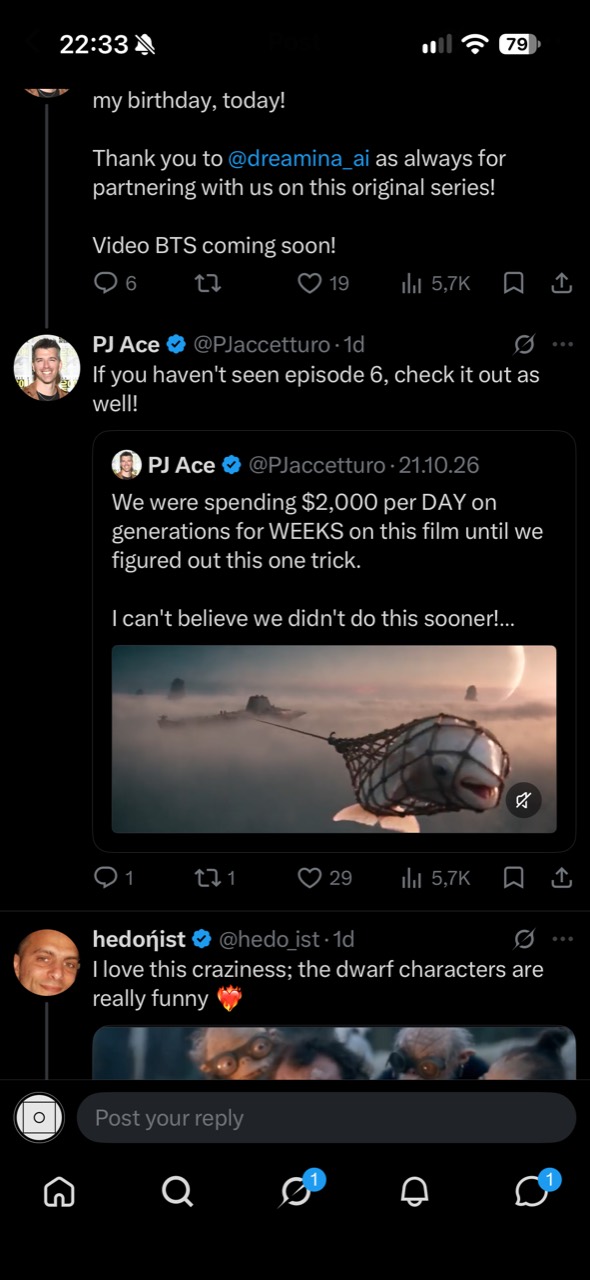
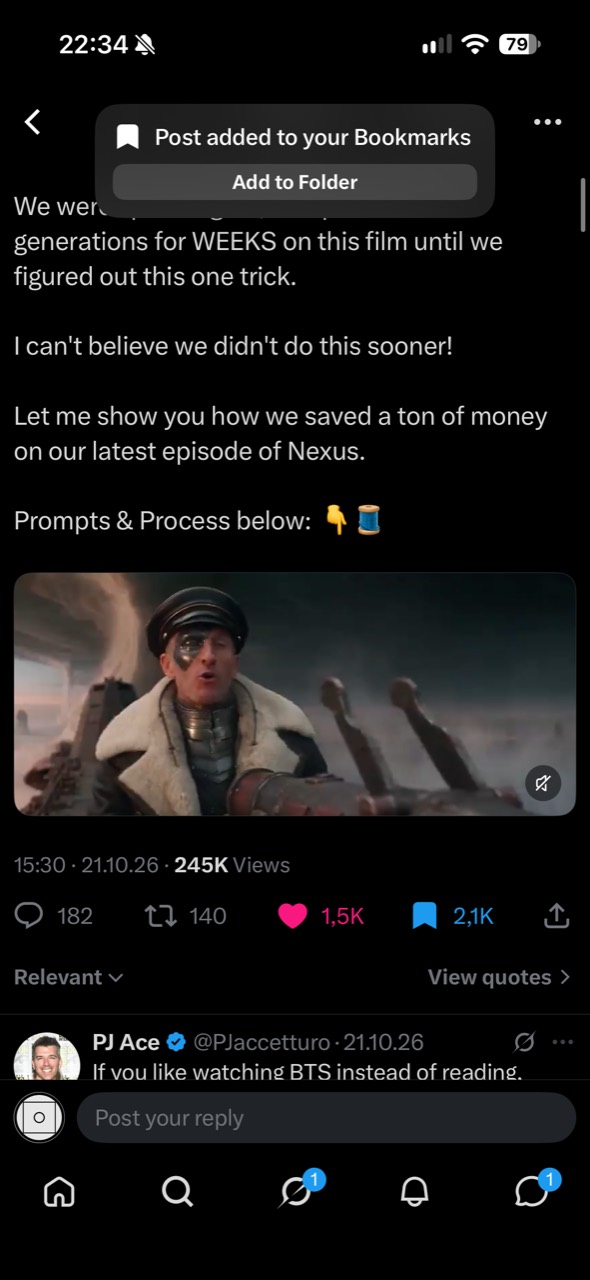
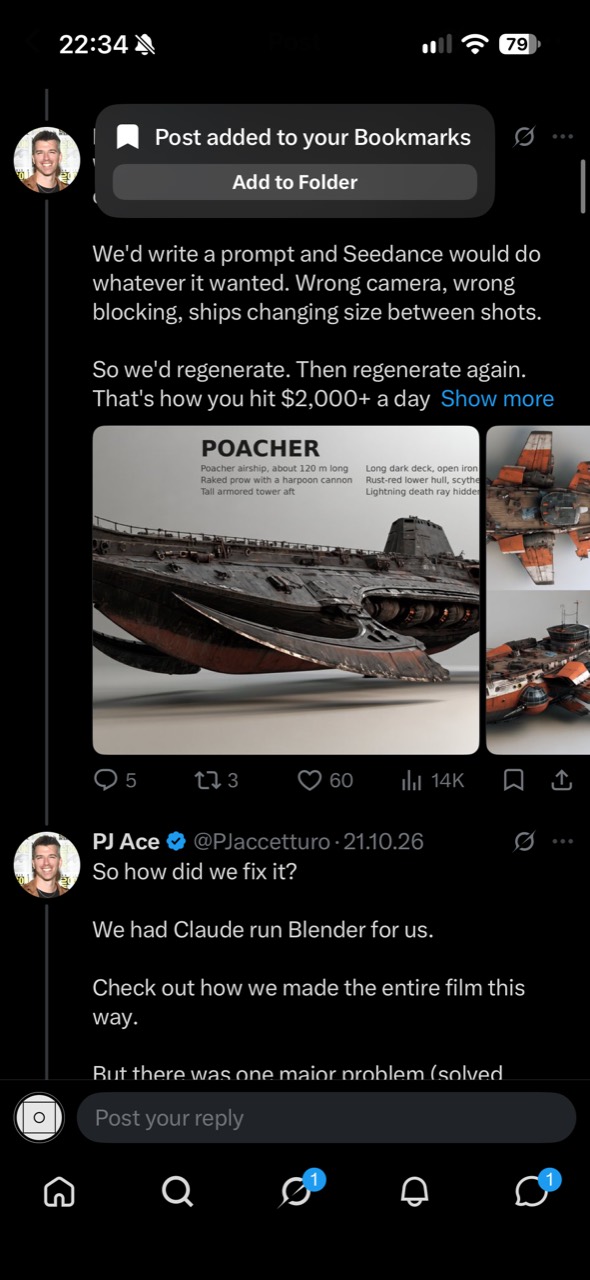
In the earlier thread, Ace reports spending more than $2,000 a day on generations while struggling with camera placement, blocking and ships changing size. In the later thread, he reports a $28,775 production cost for the dinosaur film. Those figures describe different production accounts; they cannot establish a savings percentage or a before-and-after budget on their own.
The stronger evidence is the workflow itself: preserve an accepted decision in a reference, then work on the next unresolved problem.
Put Spatial Decisions Somewhere Editable
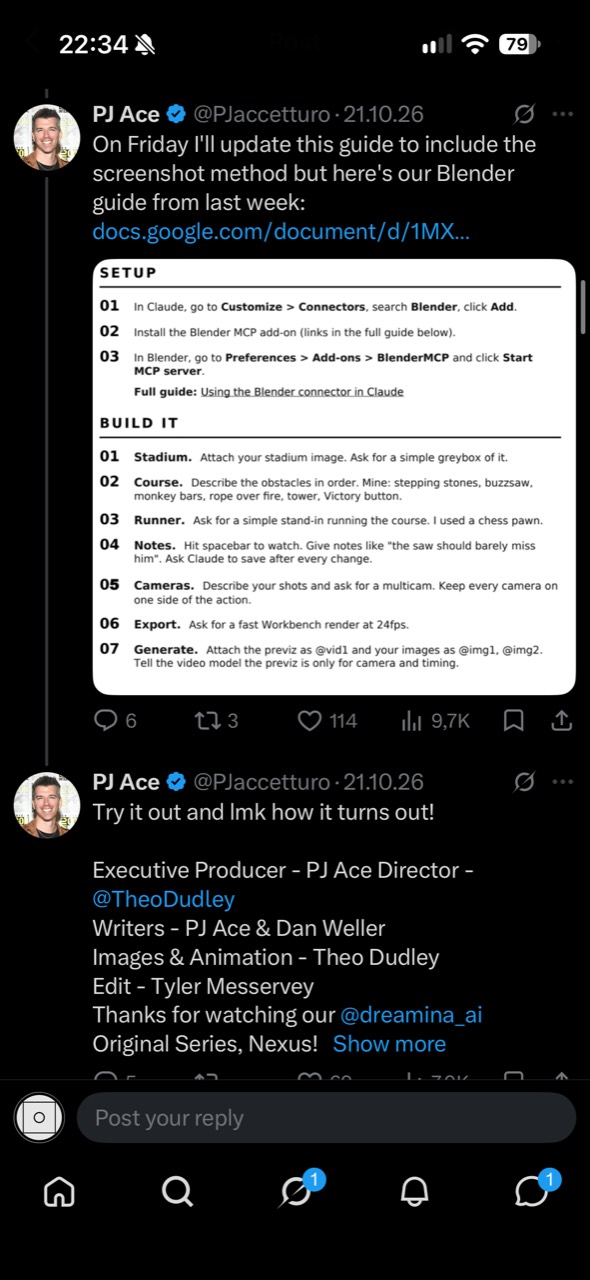
The episode-six screenshots describe using Claude to operate Blender and build simple previsualization. A rough scene can establish where a creature sits relative to a ship, how large each should appear and which side of the action the camera occupies.
That matters because these relationships otherwise have to be reinterpreted from text during generation. A plausible image can still be the wrong shot. Repeatedly requesting another version also puts already successful decisions back at risk.
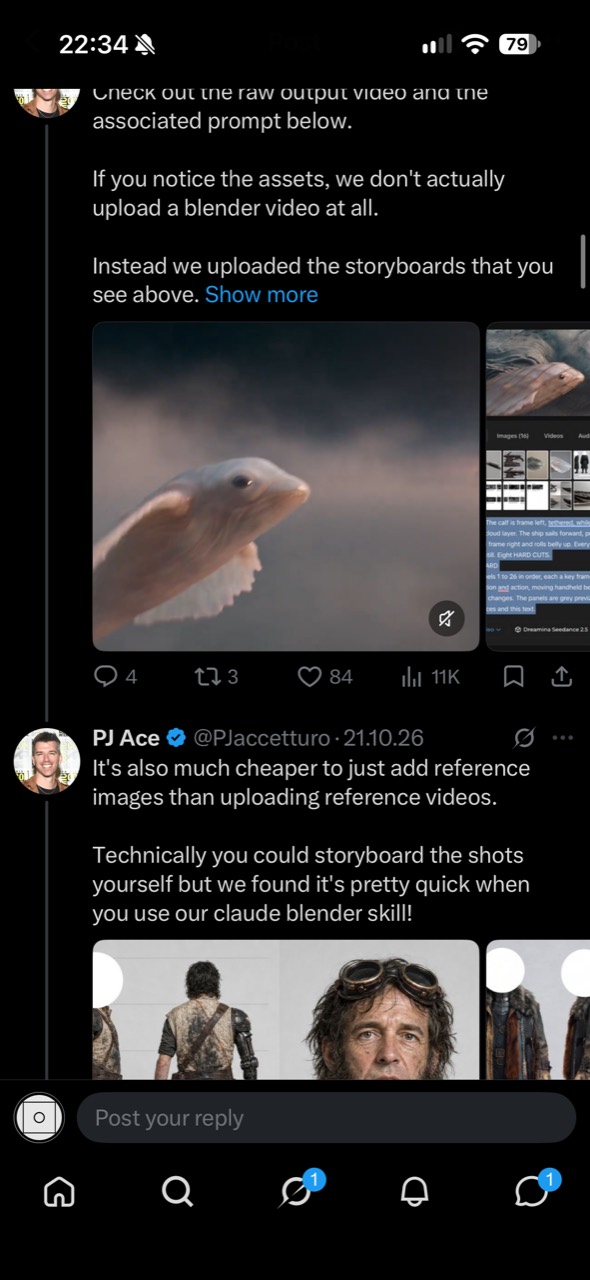
The thread describes a further adjustment: using screenshots from the Blender sequence as storyboards instead of feeding the rendered animation directly into the video model. The team wanted the spatial plan without carrying over the stiffness of that particular previs. Ace also reports lower reference costs for images in that workflow; this is a project-specific observation, not a current pricing guarantee.
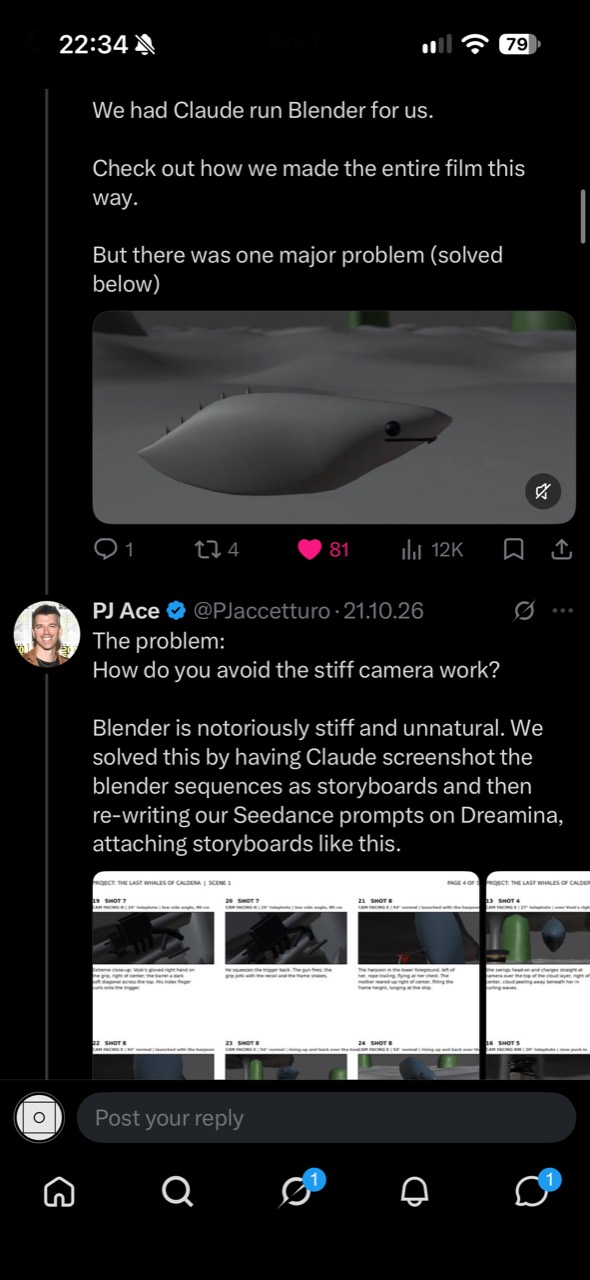
Episode-six breakdown: storyboard images carry the spatial plan into generation. Source: supplied screenshot of PJ Ace’s thread.
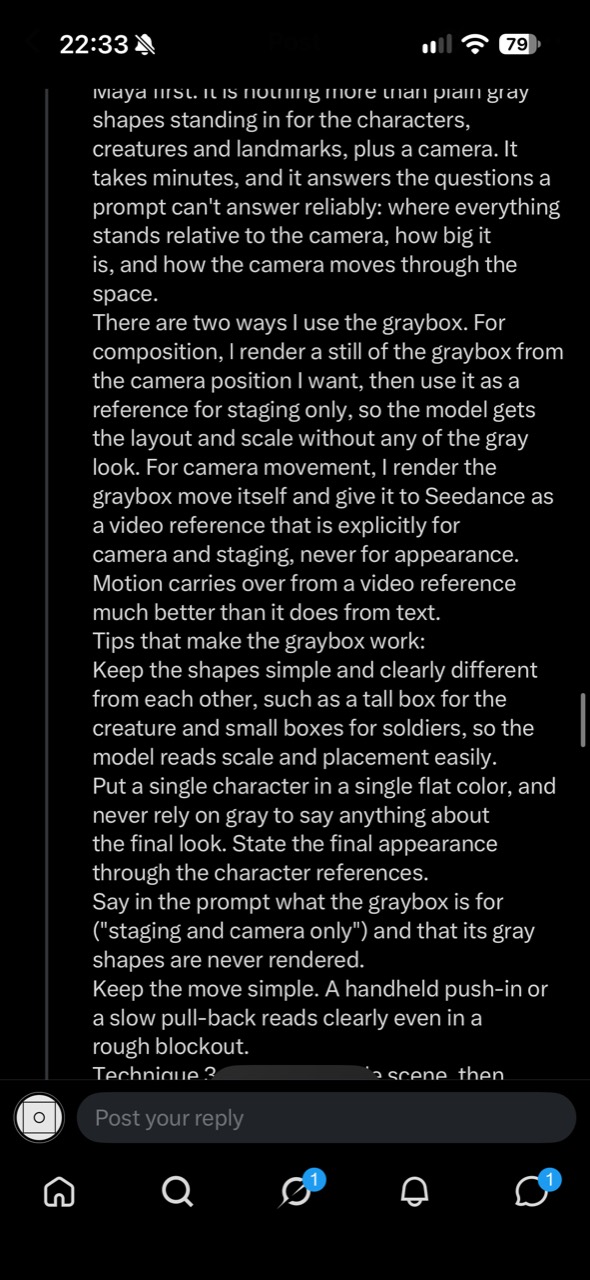
The later breakdown describes a related Maya workflow. A still graybox supplies layout and scale; an animated graybox can supply camera movement. These are different reference choices for different jobs. The shared principle is to establish spatial intent before asking for finished imagery.
Separate Coverage from Performance
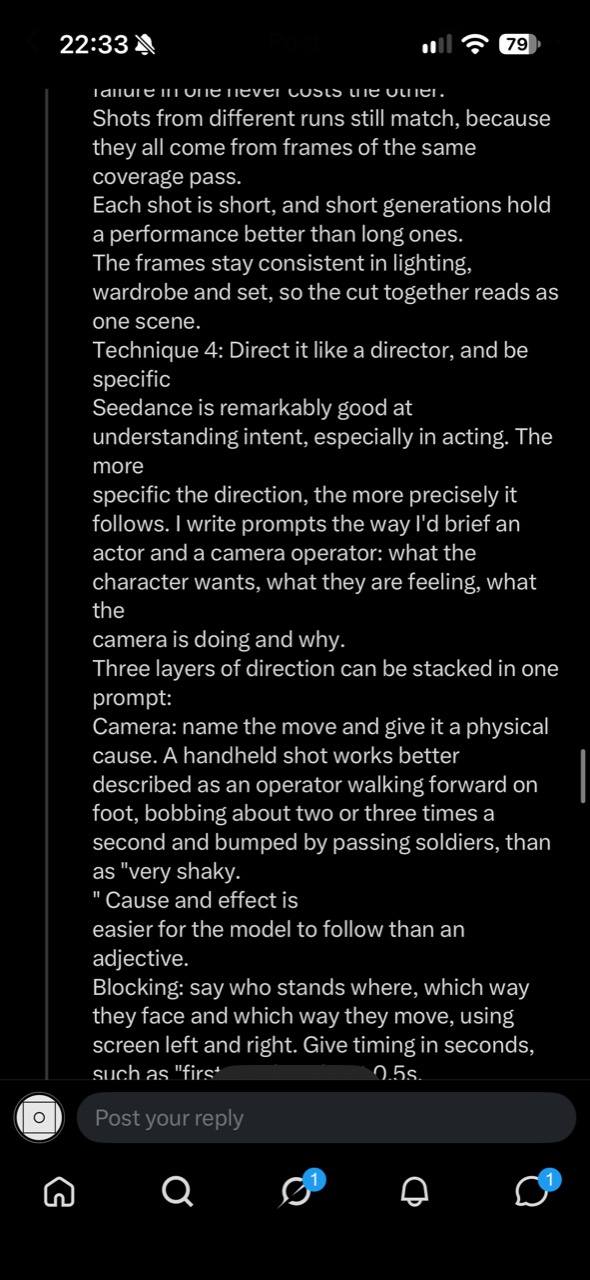
The dinosaur-film notes describe generating a broad coverage pass, selecting useful angles, extracting clean frames and then generating individual shots from those frames. The first pass is judged for coverage. Subsequent passes concentrate on acting.
This does not guarantee that every visual property remains fixed. An image reference constrains a probabilistic process; it does not turn it into a deterministic renderer. But it gives the team an accepted starting artifact and makes the next request narrower.
The distinction is architectural. If a close-up has the right framing but the wrong expression, the production should retain the framing decision while revising the expression. A whole-scene retry makes those two decisions dependent again.
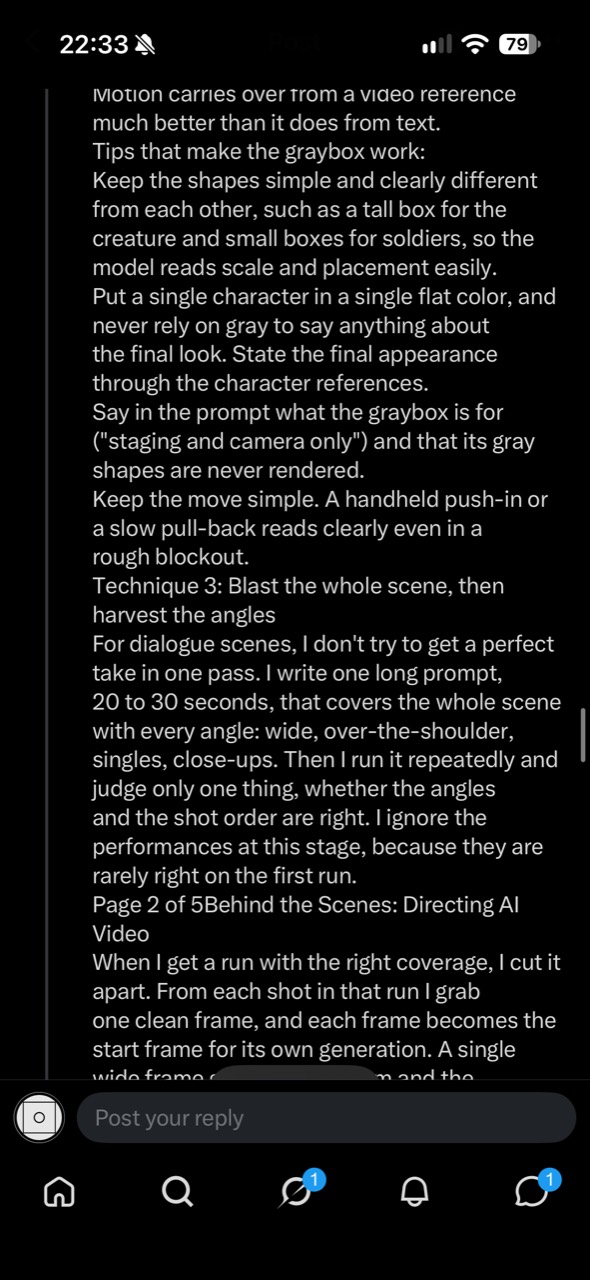
The later breakdown separates finding the angles from refining the performances. Source: supplied screenshot.
Give Every Reference a Job
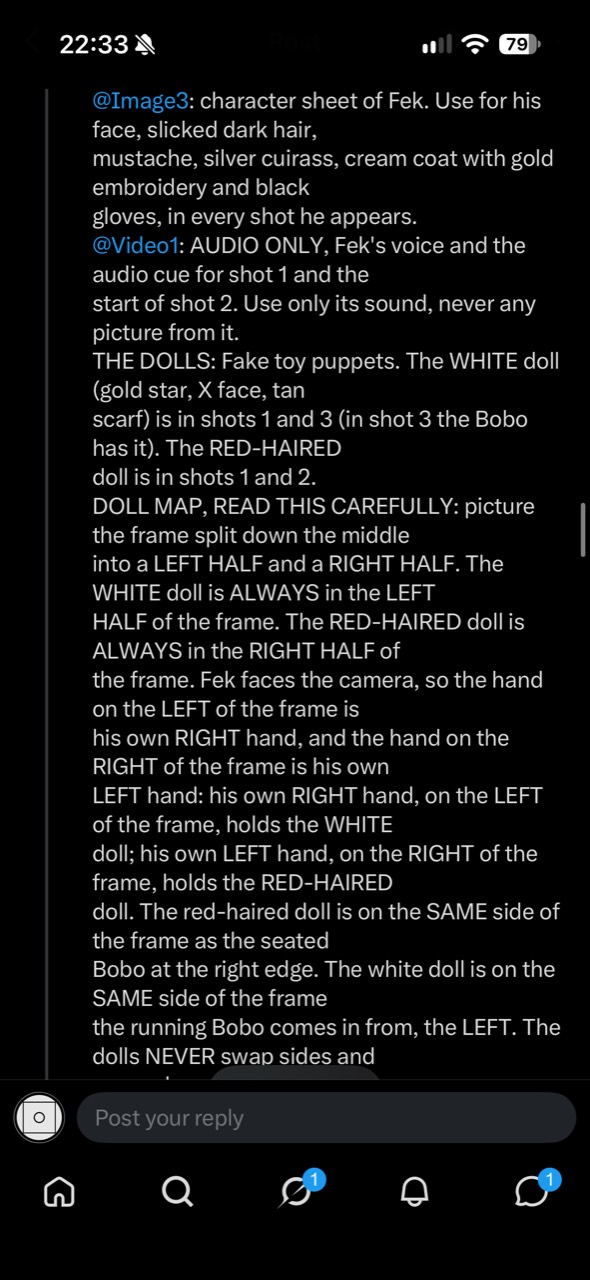
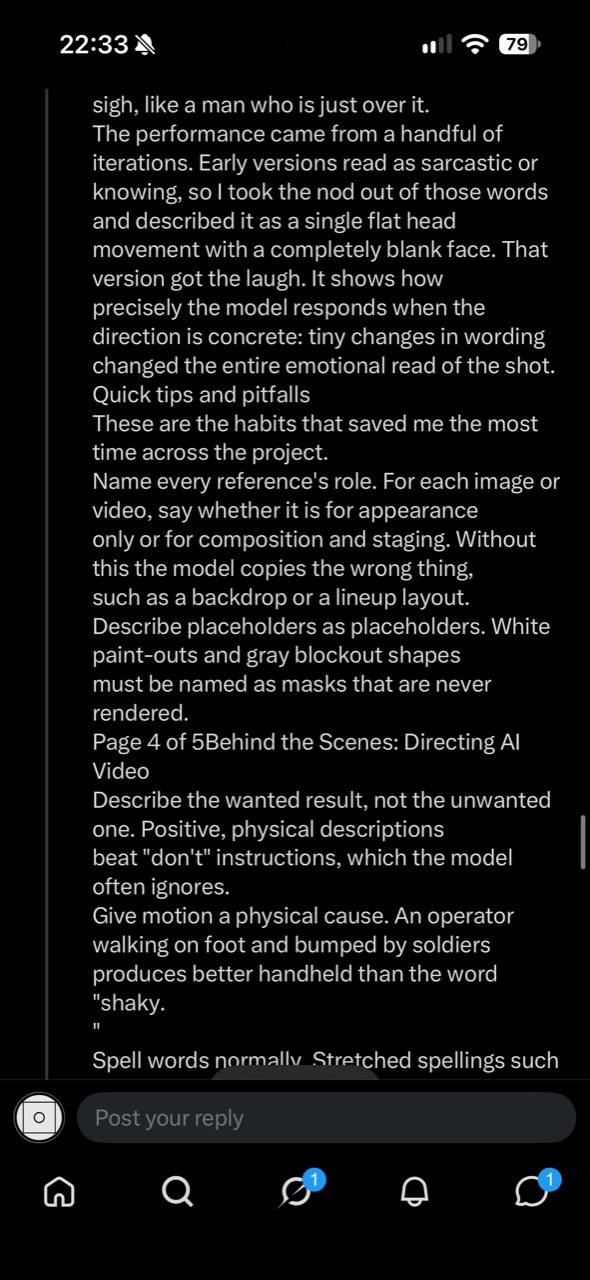
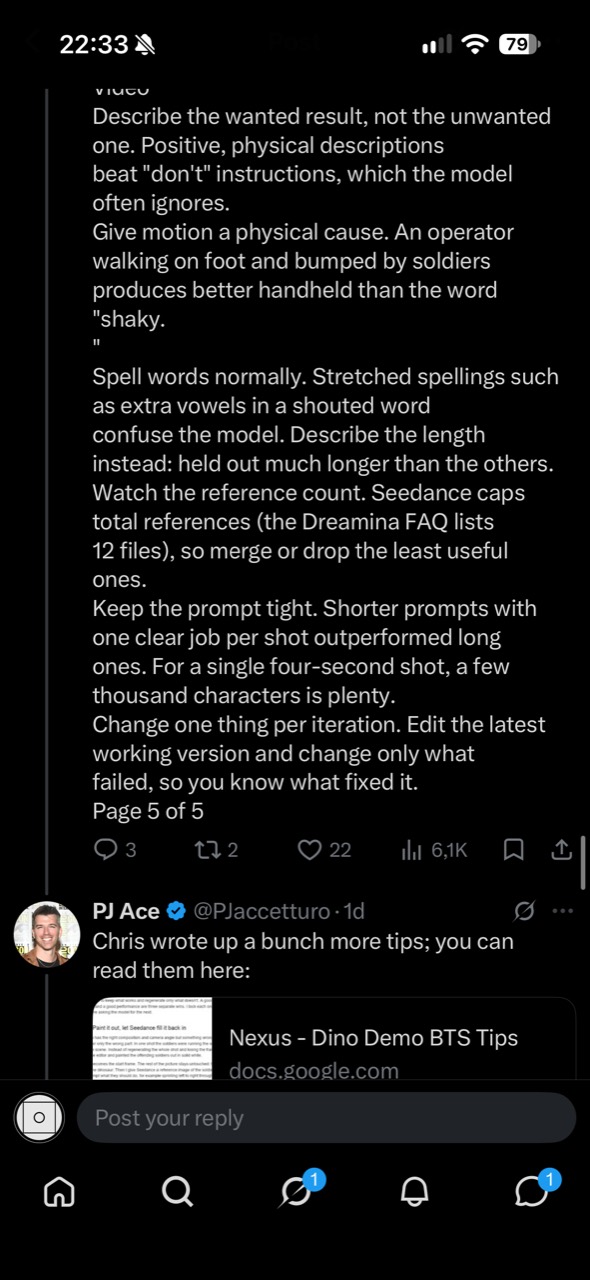
Across the screenshots, references have explicit roles: face detail, costume, environment, composition, camera movement or audio. A character lineup describes appearance; it should not accidentally dictate a lineup-shaped composition. An audio reference supplies a voice; it should not introduce its picture into the shot.
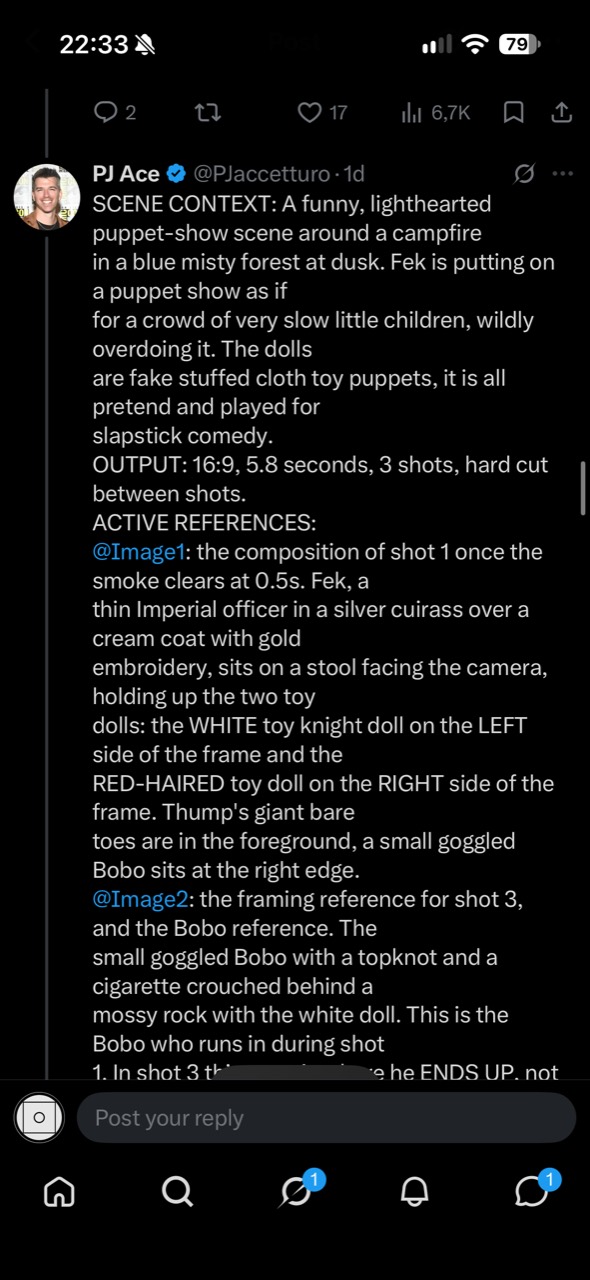
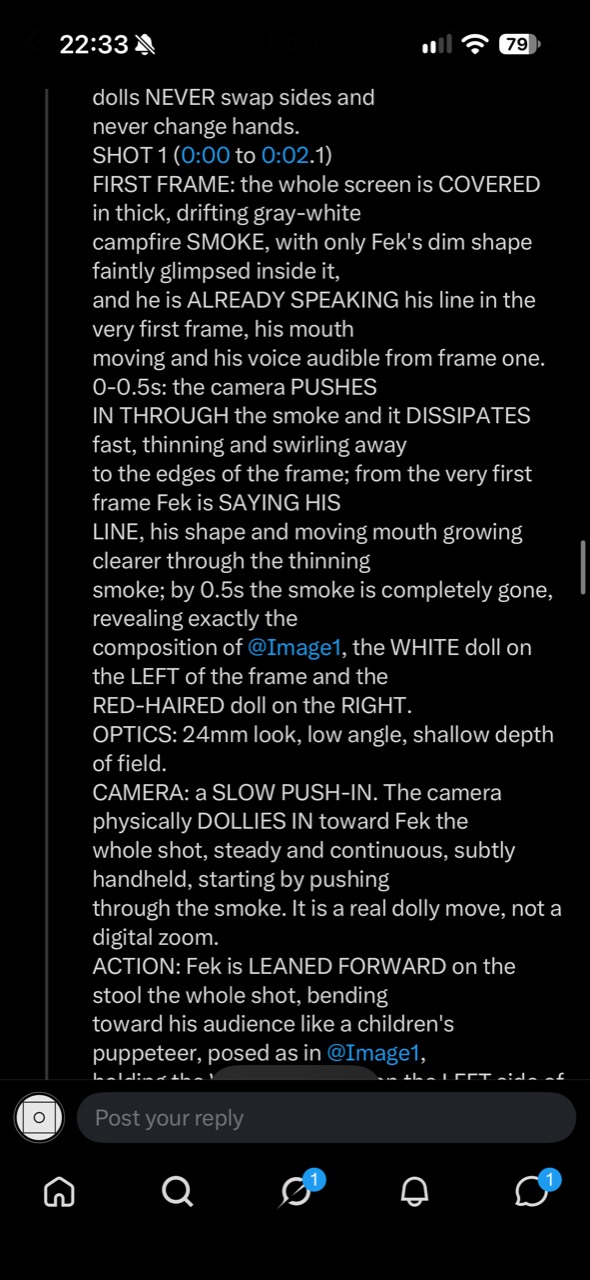
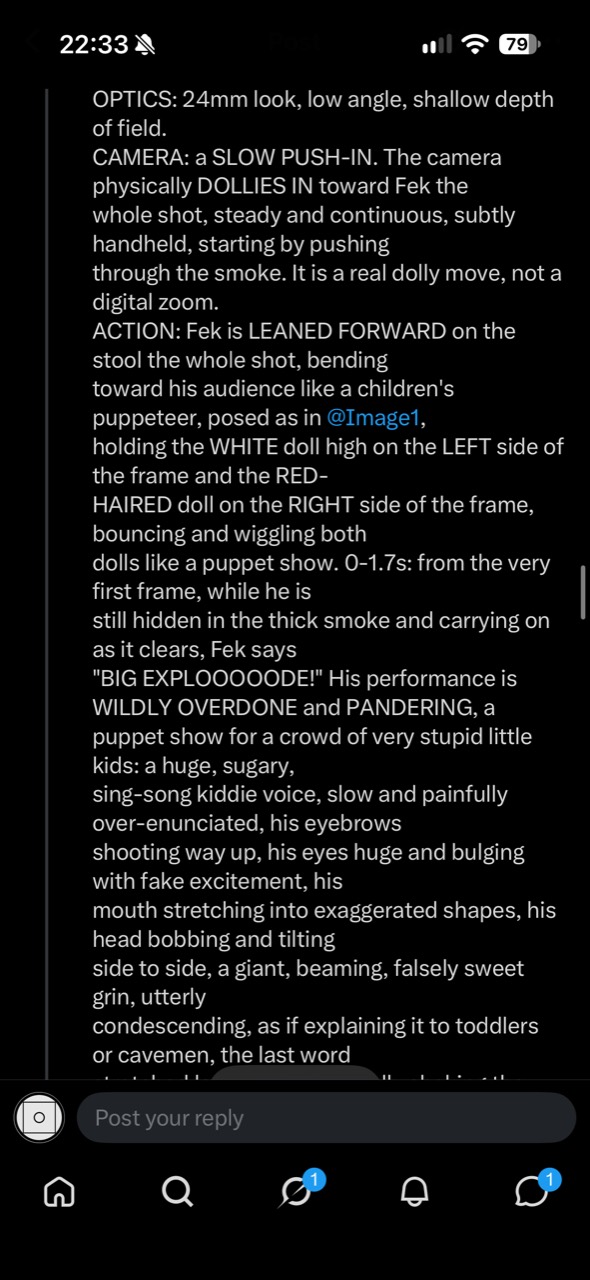
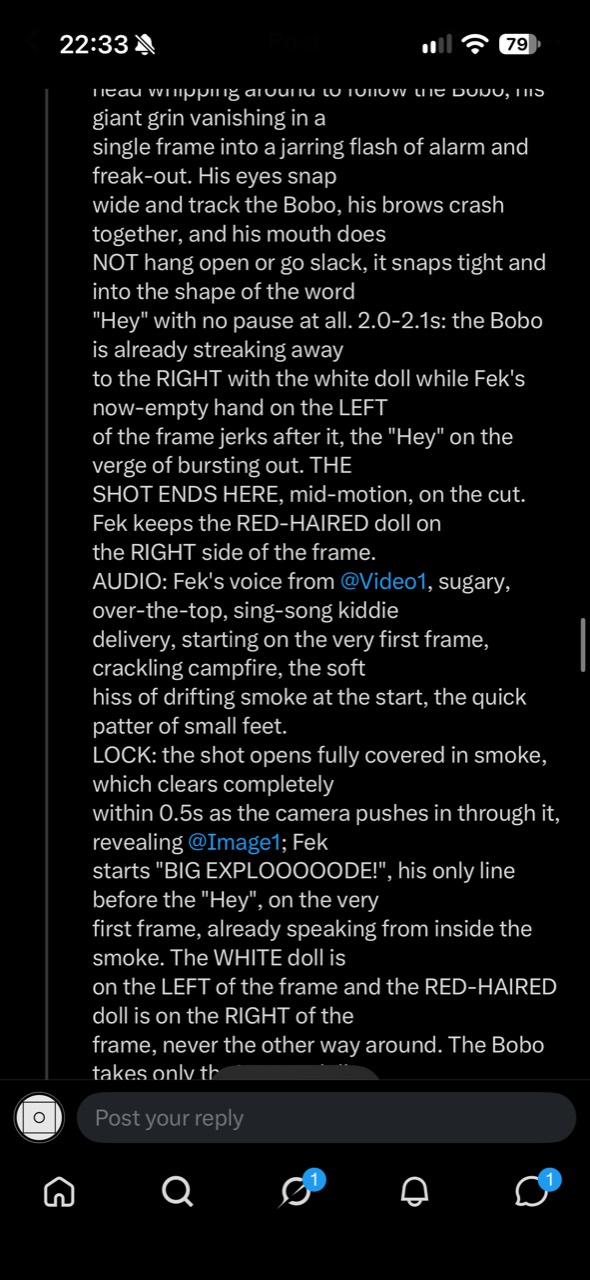
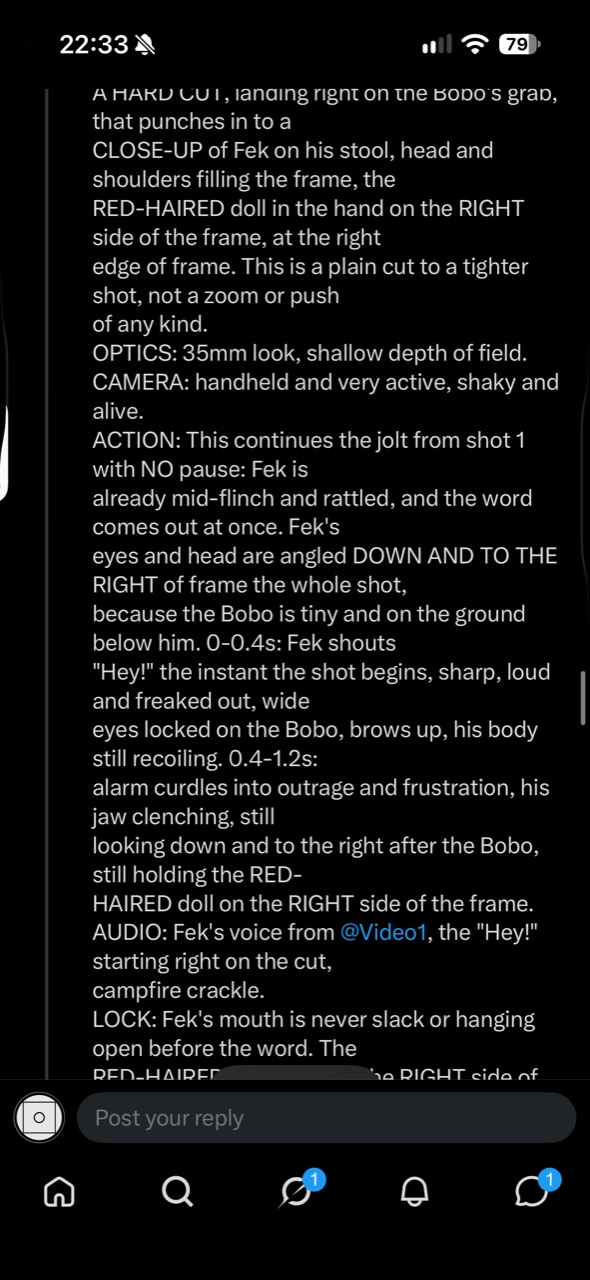
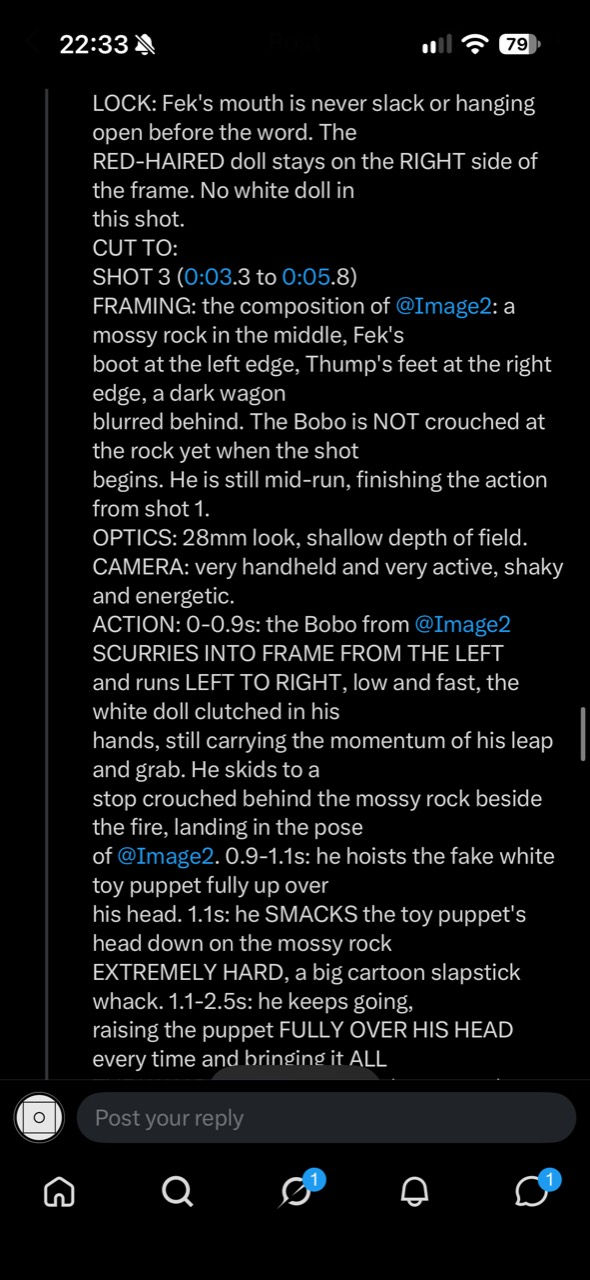
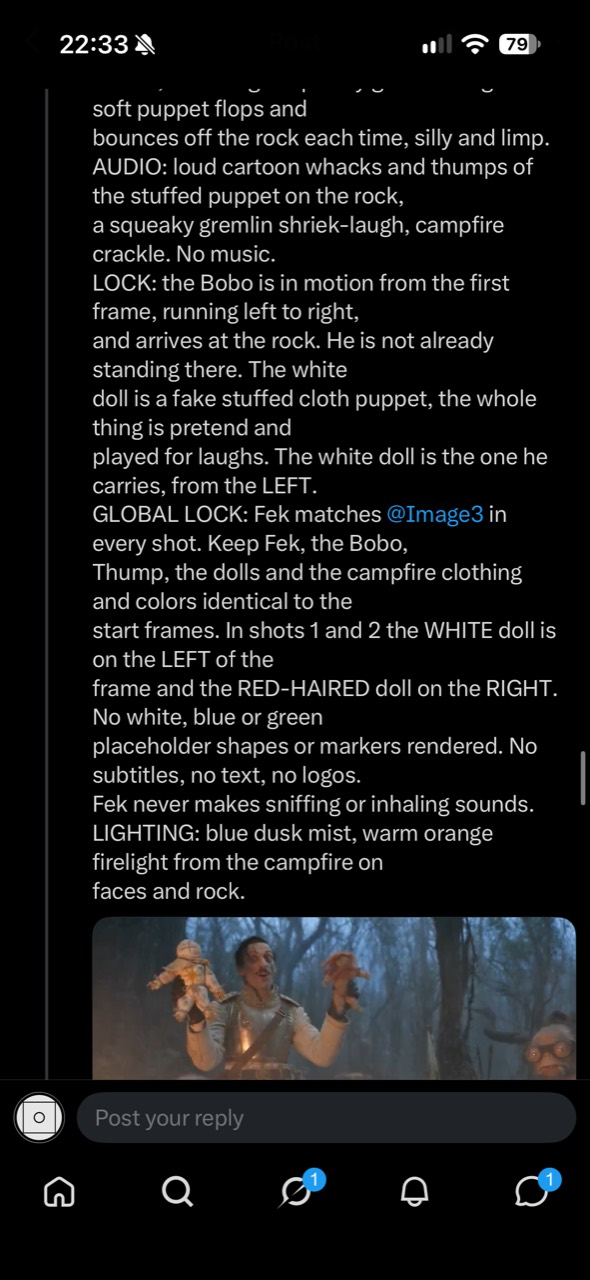
The campfire puppet sequence makes this unusually concrete. The instructions track which doll occupies each half of the frame, which hand holds it, where a Bobo enters and which object it takes. The joke depends on object ownership and action order, not merely on attractive forest imagery.
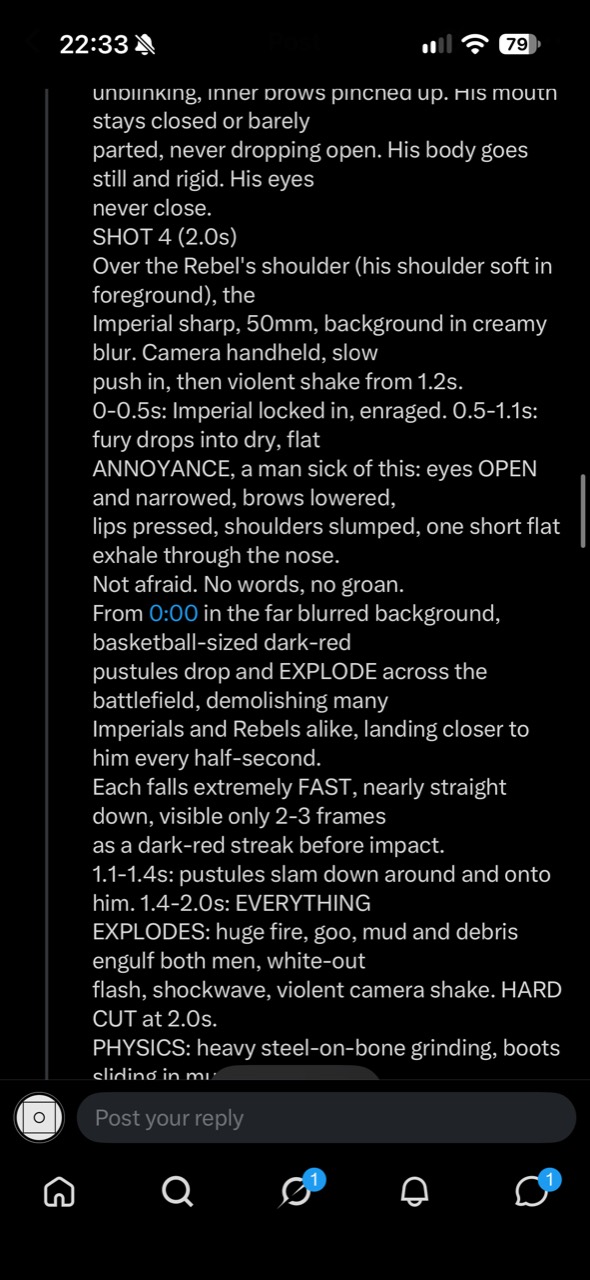
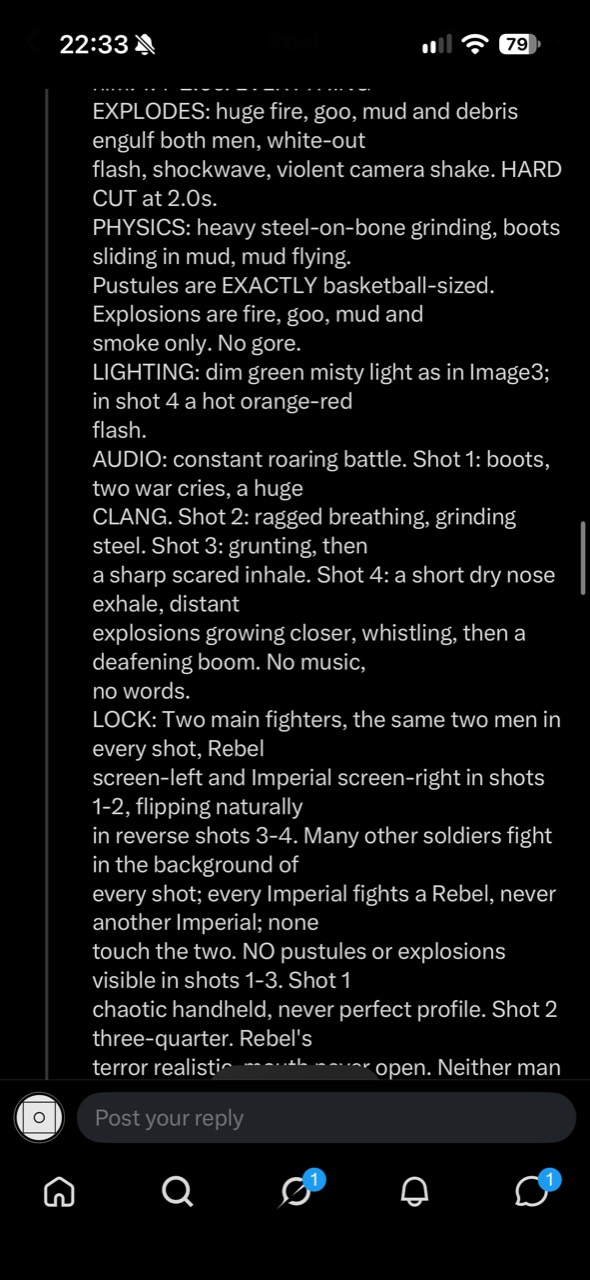
These instructions are evidence of authored production state. They also expose the burden of enforcing that state through prompts. Repeated capitalized constraints show what the team wants preserved; they do not prove every generation obeyed them.
Repair Locally and Review the Result
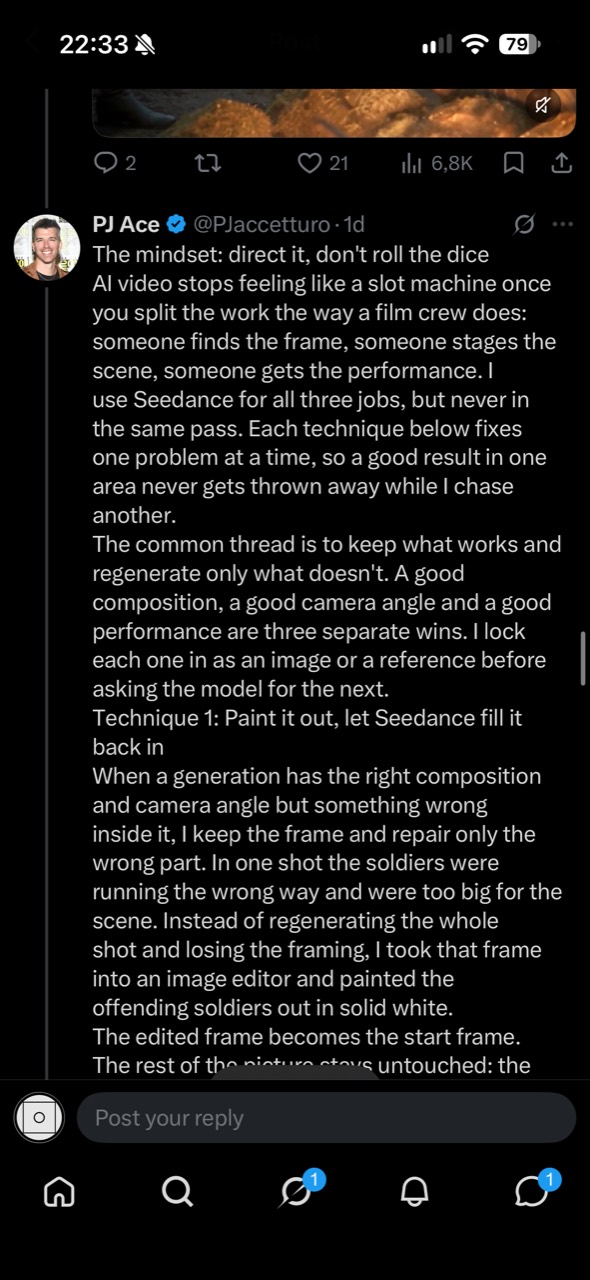
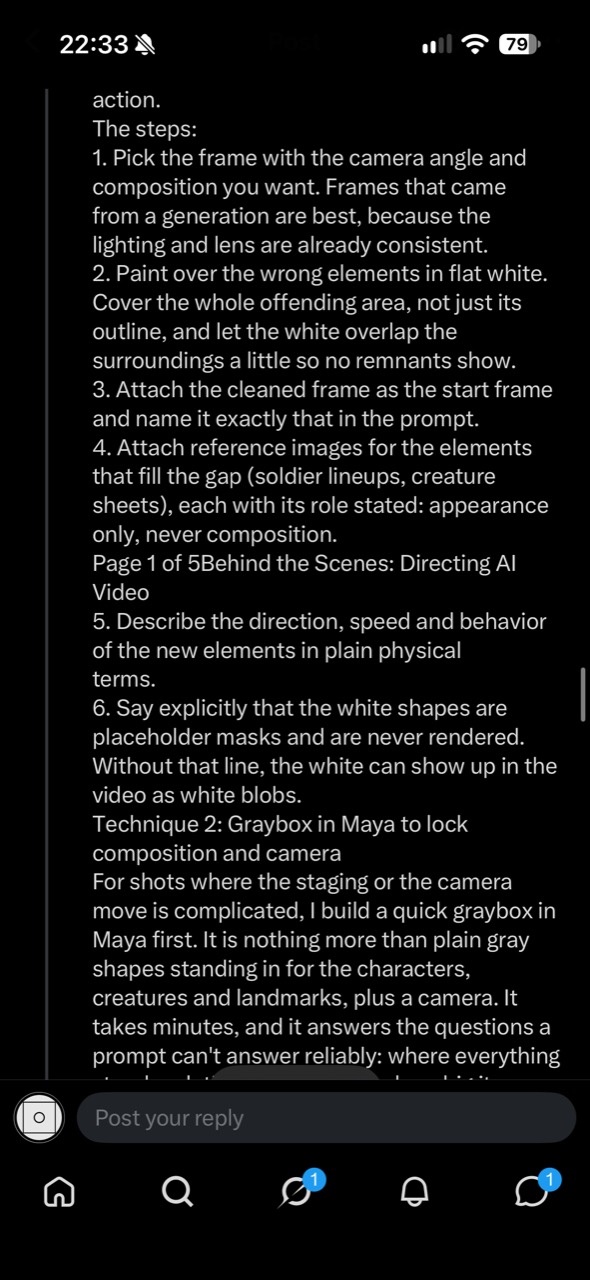
Another technique in the notes preserves a useful frame while painting out incorrectly staged soldiers in white. The edited frame becomes a new starting reference, accompanied by appearance references and a description of the replacement action.
The important idea is to retain accepted work and limit the repair request. The white paint is a workflow-specific placeholder, not evidence that every model supports a formal masking interface. The notes explicitly warn that placeholders can appear in the output if their role is misunderstood.
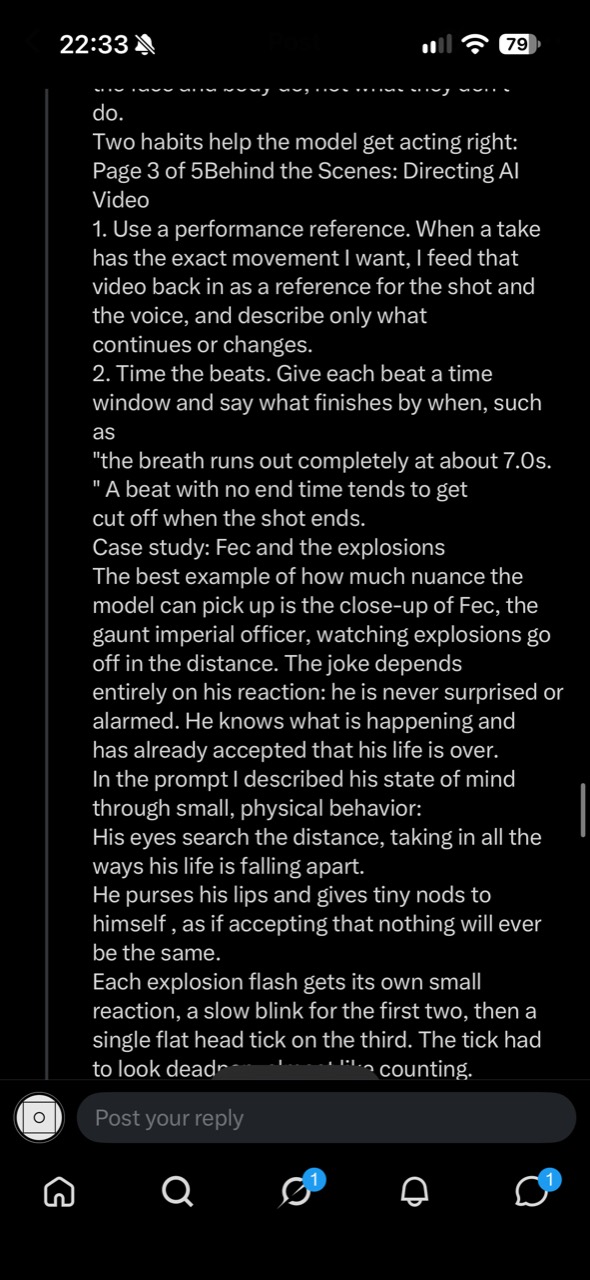
Likewise, the performance examples use timed physical behavior rather than a broad emotional label. A restrained reaction can depend on gaze, lip tension and the timing of a breath. The model supplies the performance candidate; the director decides whether it communicates the intended beat.
The Production Unit Becomes Smaller
The earlier essay calls this the Minimum Controllable Production Unit: the smallest independently specified production change. Nexus illustrates a practical way to move toward smaller units.
| Decision | External artifact | Remaining generative task |
|---|---|---|
| Spatial layout and scale | Graybox or storyboard | Render the intended arrangement |
| Shot angle and framing | Accepted frame | Develop motion and acting |
| Identity and costume | Character reference | Preserve appearance during action |
| Object ownership and beat order | Explicit shot specification | Perform the bounded beat |
| Final acceptance | Human review and edit | Submit another candidate if needed |
The screenshots support the architectural argument because the reported solutions repeatedly recover control outside generation. They do not establish that models cannot improve, or that all creative exploration requires rigid planning. They show why exploration and accepted production state need different treatment.
For a practical workflow, define the spatial plan, approve useful frames, assign reference roles, generate one unresolved beat and review continuity before accepting it. Keep the accepted artifacts available for the next revision.
The model’s creative capacity remains valuable. The production becomes more dependable when it owns the decisions that must survive the next generation.
Source Screenshots
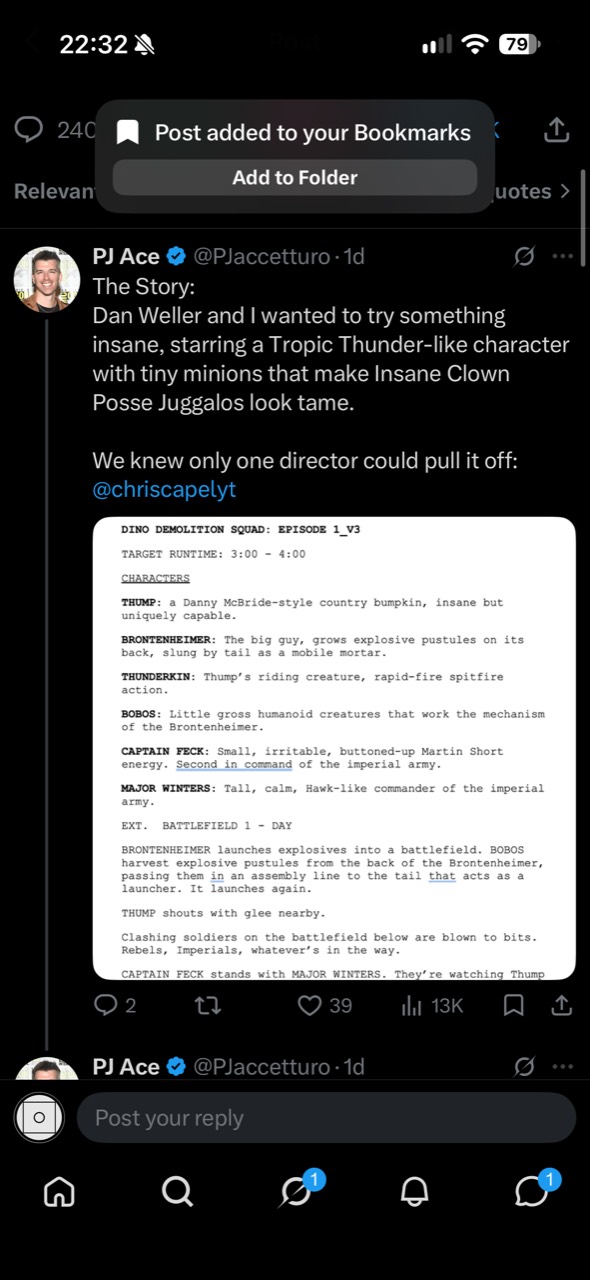
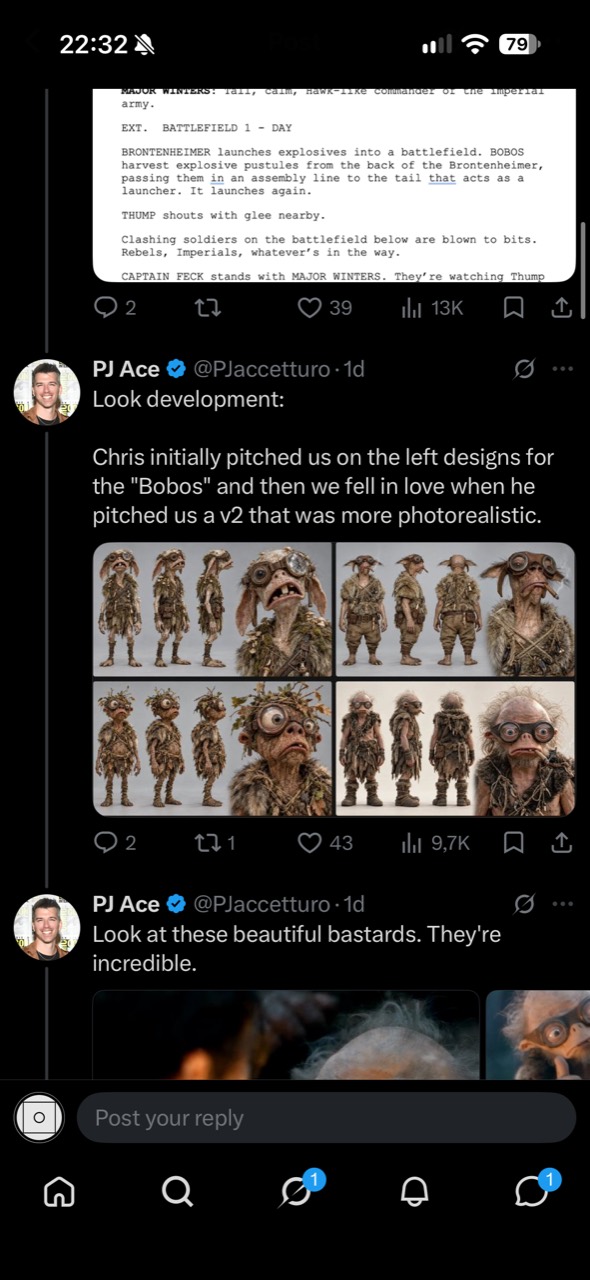
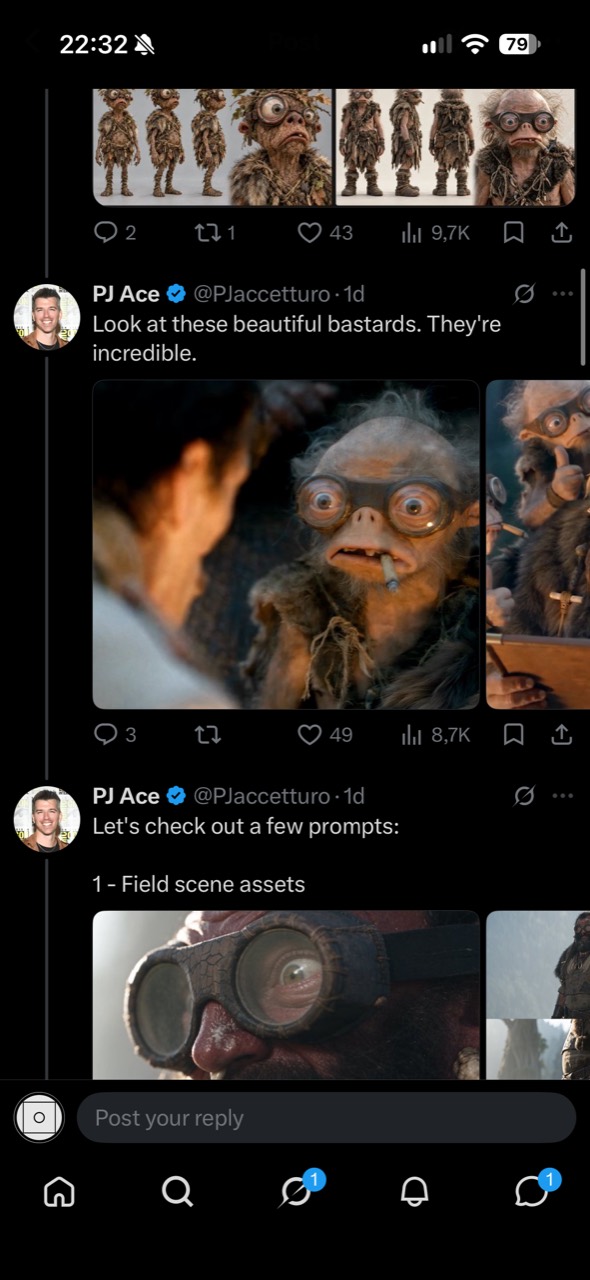
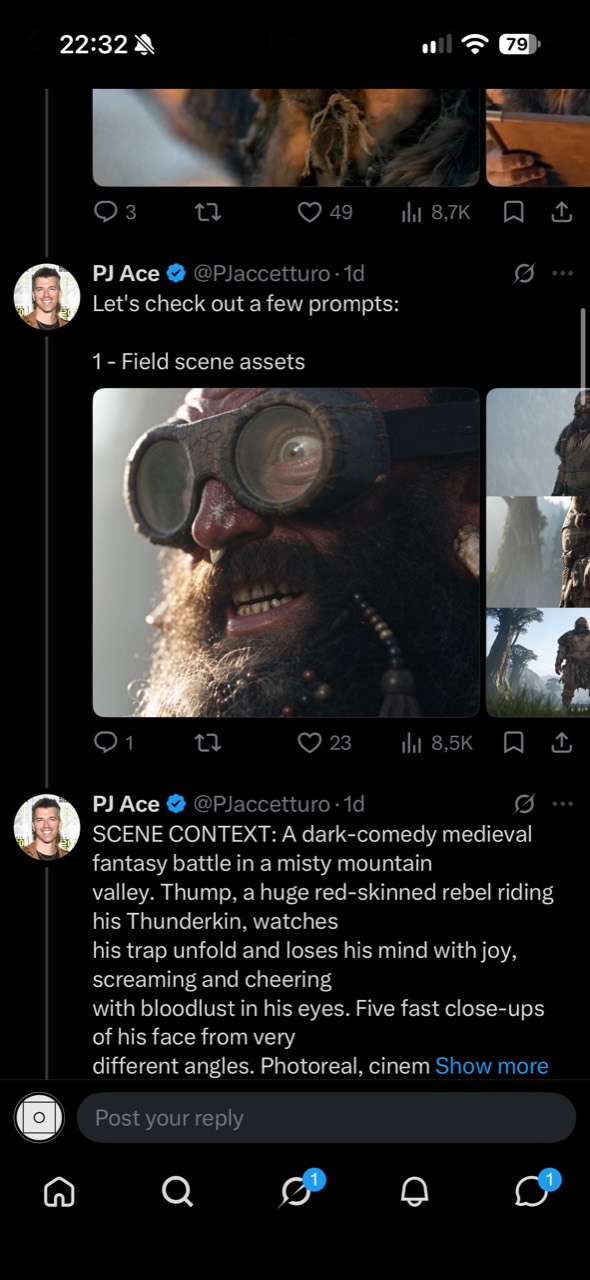
The original screenshots are preserved with this article. The selected examples above illustrate the analysis; the complete sets retain their upload order:
- Dinosaur film and battle prompts: 1 , 2 , 3 , 4 , 5 , 6 , 7 , 8 , 9 , 10
- Campfire sequence and continuity constraints: 1 , 2 , 3 , 4 , 5 , 6 , 7 , 8 , 9 , 10
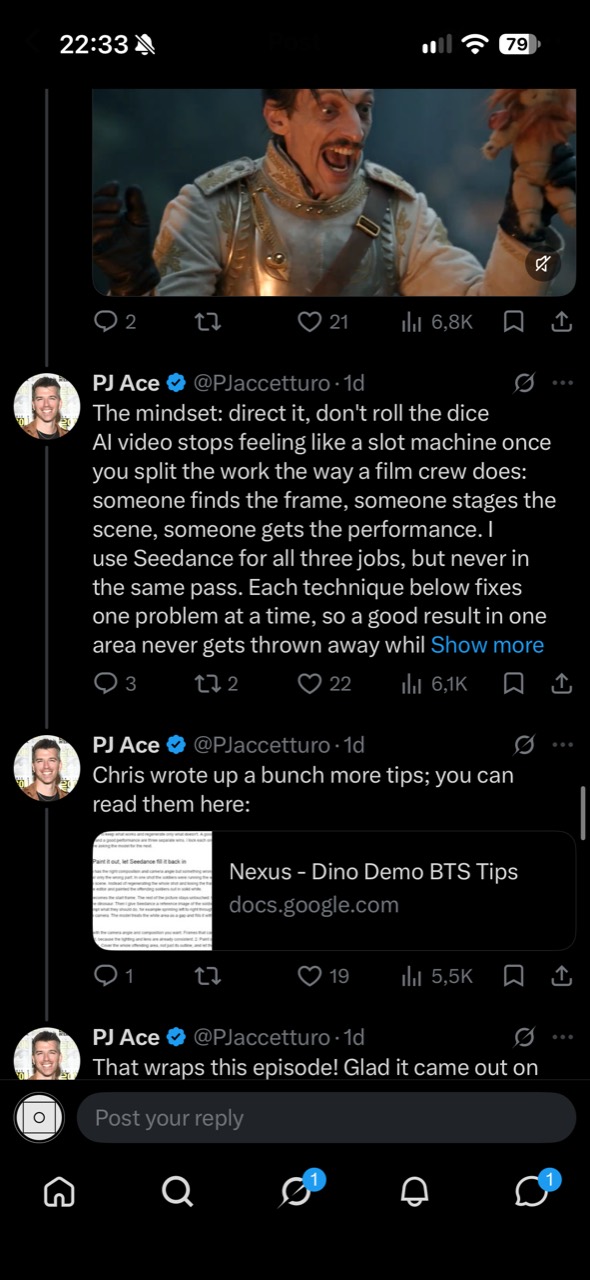
- Production methods and iteration notes: 1 , 2 , 3 , 4 , 5 , 6 , 7 , 8 , 9 , 10
- Episode-six Blender and storyboard workflow: 1 , 2 , 3 , 4 , 5 , 6 , 7
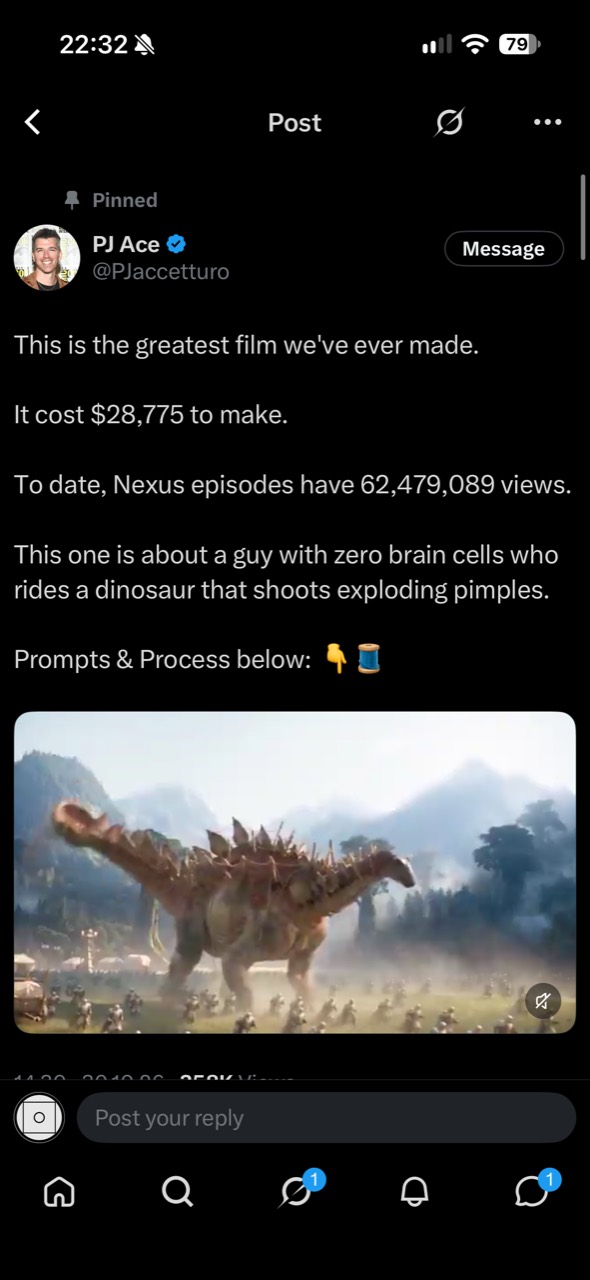


The screenshots are attributed to PJ Ace (@PJaccetturo); the later thread credits Chris Capel as director, while the earlier episode credits Theo Dudley. Header and tile artwork are original conceptual illustrations, not Nexus production frames.